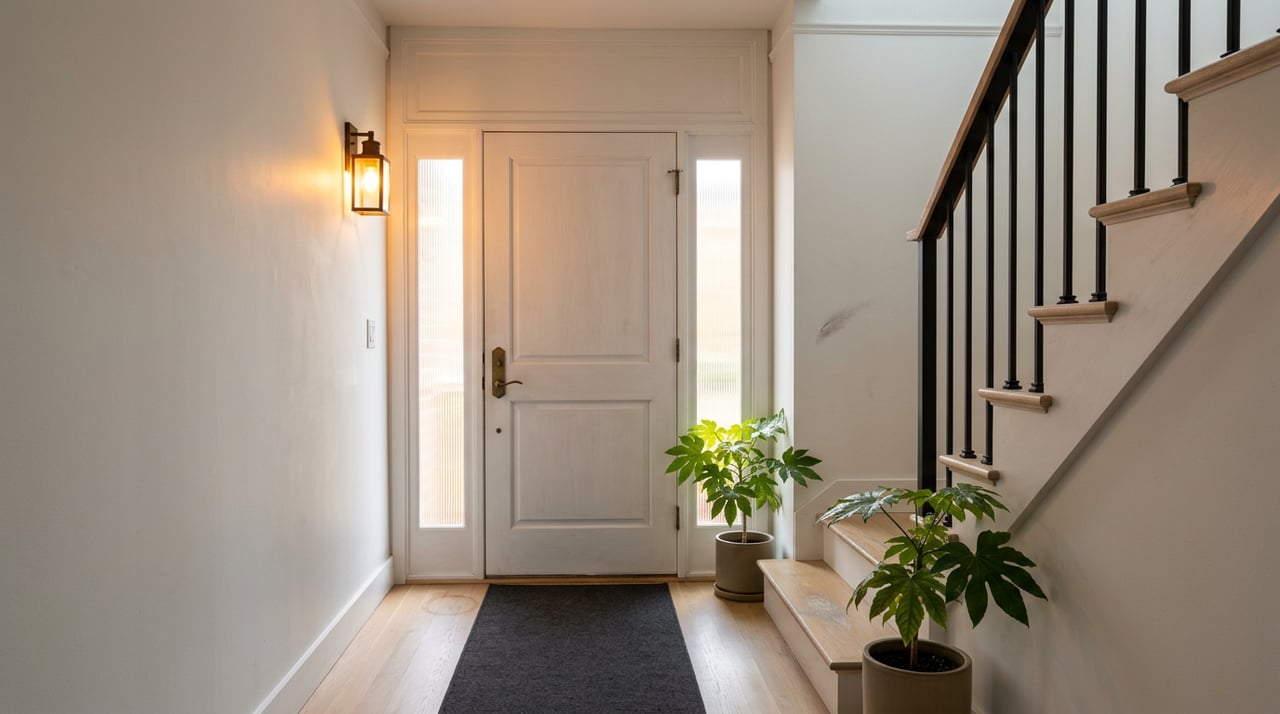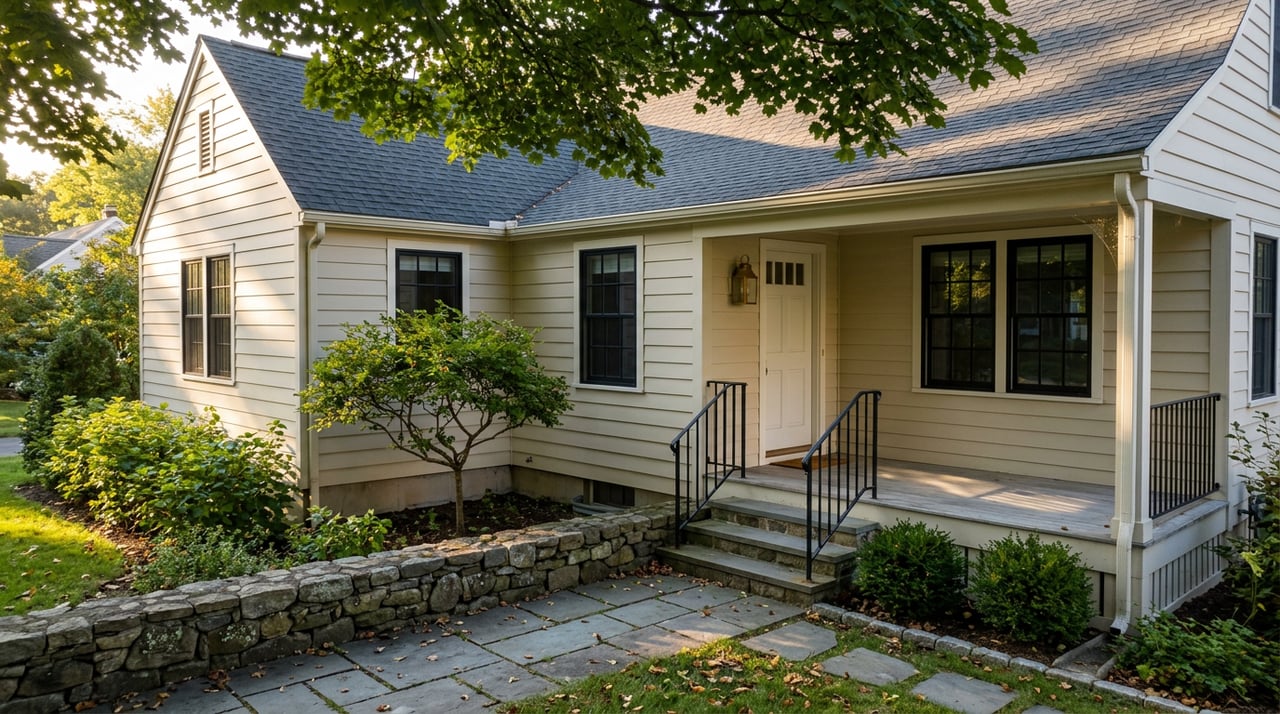
Most people who live within a ten-minute walk of Chatham Village have never set foot on its trails, and the reason isn't distance. It's a mistaken assumption. The private roads, the "please follow posted instructions" signage, and the general hush of the place lead a lot of Mount Washington residents to treat the whole 46-acre community as closed ground, houses and woods alike. That's wrong. The roads and the townhouses are private. The nearly 26 acres of woodland behind them, laced with about two miles of walking trails, is not.
That distinction matters more this month than usual, because Chatham Wood is in the middle of a multi-year management project that's actively reshaping what you'll see if you go. Here's what's actually back there, what's changing, and how to walk it without becoming the reason the gate gets less welcoming.
The landmark status that confuses everyone
Chatham Village earned National Historic Landmark designation in 2005, and that's usually where the confusion starts. People hear "landmark" and assume "look, don't touch." But Chatham Village isn't a museum property. It's a working residential community that happens to have architectural significance. The Buhl Foundation built it between 1932 and 1936 as what preservation records describe as a city village for modest-income families. Clarence Stein and Henry Wright served as planners and consulting architects, the actual townhouse designs came from Ingham and Boyd, and the grounds were laid out by Ralph Griswold and Theodore Kohankie, whose plan turned the steep site into a series of interior courts and garden spaces that keep cars and foot traffic separate.
That design choice, cars on the perimeter roads, people in the interior greens, is exactly why the roads read as private and the woodland reads as open. The roads circle the development so residents can park without cutting through the courts. The woods sit behind that ring, connected to the community but not gated off from foot traffic the way the streets effectively are.
What's actually back there
Chatham Wood is the name for the wooded stretch behind the townhouses, and it's a legitimate destination on its own, not just a buffer between neighbors and the property line. The trail network runs roughly two miles through the trees, crosses a stream on a small footbridge, and ends near Chatham Hall, the original manor house that now serves as the community clubhouse. There's a picnic area near the Hall with benches, tables, and a stone grill available for resident use. The tennis courts, basketball court, ball fields, and garden plots you'll see along the way belong to residents. The woodland path does not.
If you're picturing something manicured, recalibrate. This is real second-growth forest on a hillside, not a landscaped park loop. Some of the oaks and hickories in the canopy predate the 1930s construction entirely.
A woodland mid-project, right now
Here's the part that makes a September visit more interesting than a generic fall walk. Chatham Village adopted a Pennsylvania Forest Stewardship Plan and began a woodland enhancement project that's being carried out in stages over the next decade. That means the tree cover you're walking through isn't static. It's being actively managed, thinned in places, and replanted in others, as part of a documented long-term plan rather than routine upkeep.
The species list gives you something to actually look for as you walk. The canopy includes oak, maple, hickory, cherry, basswood, tulip tree, Osage, hackberry, hawthorn, sassafras, and black locust, with spicebush and viburnum filling in the shrub layer. If a section of trail looks recently opened up or newly planted, that's the stewardship plan doing its work, not neglect.
What you'll likely see or hear
Chatham Wood supports a fuller resident wildlife population than most people expect from a 26-acre patch inside city limits. Squirrels, raccoons, groundhogs, deer, and turkey all use the woods regularly, and the raptor activity is worth watching for specifically. Cooper's hawks and sharp-shinned hawks are considered regular sightings here, and there's occasional evidence of owls as well. Early fall, with the canopy starting to thin, is a reasonable window for spotting the hawks working the tree line before leaf-off makes it too easy and the birds move on.
The etiquette that keeps the gate open
Chatham Village works as a public-adjacent amenity because the people who use it respect the line between the woods and everything around them. That arrangement holds only as long as visitors don't test it. A few rules aren't optional:
- No dogs on the property. This is stated plainly by the community itself, not a suggestion.
- Stay on the marked trail network. The interior courts, gardens, and yards belong to residents even where there's no fence.
- Don't park on the private roadways. If you're driving over, park on a public street nearby and walk in.
- Keep the visit low-key. This is someone's residential street before it's anyone's scenic loop.
If you want a similar walk with fewer restrictions, Emerald View Park sits right next door and offers close to nine miles of fully public trail across 235 acres. Chatham Wood and Emerald View Park are often talked about as though they're the same system. They're not. One is a private community's woodland that tolerates respectful foot traffic. The other is a public regional park. Confusing the two is how well-meaning walkers end up somewhere they shouldn't, with a dog they shouldn't have brought.
Two stops that make it a full outing
Chatham Village itself doesn't have retail beyond an occasional corner store, so pair the walk with what's actually on Mount Washington's commercial streets. Cafe Cravings, near Bigham Tavern, is the closest coffee-and-breakfast stop to the Village entrance and a reasonable place to start or end the loop. On the other end of the neighborhood, love, Pittsburgh on Shiloh Street sells city-branded gear and goods from local makers if you want to close out the afternoon with something made here rather than another skyline photo from Grandview.
None of this requires planning a special trip. It's a walk that already exists inside the neighborhood most of you drive past on the way to the incline or Grandview Avenue, and it's been open the whole time.
Mount Washington rewards the kind of attention that notices what's already there before assuming it's off limits. That's the same instinct that makes a good real estate decision in a neighborhood like this one, where the interesting inventory is rarely the listing everyone's already seen. If you're weighing what your own piece of Mount Washington is worth, or wondering how a home near Chatham Village or the Grandview corridor compares to the rest of the Mount Washington market, Michele Leone has spent years reading this hill block by block. Get your instant home valuation whenever you're ready to see where you actually stand.